Health and Safety Policy for End of Tenancy Cleaners
 This health and safety policy sets out the standards that guide end of tenancy cleaners in carrying out services safely, responsibly, and consistently. Our approach is designed to protect staff, clients, tenants, landlords, and anyone else who may be affected by our work. We recognise that end of tenancy cleaning often takes place in occupied or recently vacated properties, where hazards may include slippery floors, cleaning chemicals, sharp waste, broken fixtures, dust, mould, and electrical risks. For that reason, we maintain clear procedures to reduce risk and support a safe working environment.
Every member of the cleaning team is expected to act with care, follow safe systems of work, and report concerns promptly. We believe that good safety practice is not separate from quality service; it is an essential part of professional end-of-tenancy cleaning. The policy applies to all tasks, including kitchen sanitation, bathroom deep cleaning, appliance wiping, floor care, window cleaning, and waste removal. It also covers travel to and from properties, use of equipment, manual handling, and emergency response.
Risk awareness begins before work starts. Team members should assess the property layout, identify any obvious hazards, and check whether there are signs of water damage, exposed wires, unstable furniture, or other unsafe conditions. If an area appears unsafe, cleaning must be paused until the risk is reduced or the task can be completed using additional controls. A careful and well-managed end of tenancy cleaning service depends on this early assessment.
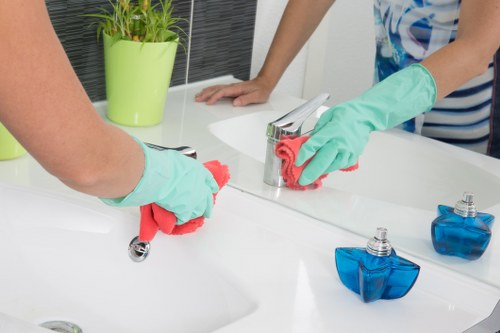
 All cleaners must use the correct personal protective equipment, which may include gloves, masks, eye protection, and suitable footwear. PPE is chosen according to the task and the products being used. Gloves protect against detergents, grime, and potential contamination, while closed shoes help reduce slips, trips, and impact injuries. If a product requires additional protection, that requirement must be followed without exception.
Cleaning products must be stored, handled, and used in line with manufacturer instructions. Chemicals should never be mixed unless the label clearly permits it, as this can create dangerous fumes or reactions. Containers must remain labelled and secured, and any decanted product must be identified clearly. We use the minimum quantity necessary to achieve a hygienic result, supporting both safety and efficient end of tenancy cleans. Staff are trained to understand dilution, contact times, ventilation needs, and safe disposal methods.
Manual handling is another important part of safe working. Items such as bins, vacuums, bedding, furniture, and boxed waste can create strain if lifted carelessly. Cleaners should bend at the knees, keep loads close to the body, and avoid twisting while carrying. When an object is too heavy, awkward, or unstable, it should be moved by two people or with the help of suitable equipment. This helps prevent injury and supports reliable end of tenancy cleaning operations.
 Slips, trips, and falls are among the most common hazards in cleaning environments. Floors may be wet, recently polished, cluttered, or uneven. To control this risk, warning signs should be used where necessary, walkways kept clear, and cleaning progressed in a tidy sequence. Tools, cords, and buckets must not block exits or create trip points. Staff should also maintain awareness when working on stairs, in bathrooms, and around entrances.
Electrical safety must be taken seriously at all times. Equipment should be inspected before use to check for damage, exposed wires, loose plugs, or other faults. Any defective item must be removed from service immediately. Water and electricity are a dangerous combination, so cleaners must take special care around sockets, appliances, and damp surfaces. Power should be isolated where necessary and only used in accordance with safe procedures. Proper attention to this area protects both personnel and property during professional end of tenancy cleaning.
Ventilation is essential when using cleaning chemicals or working in enclosed rooms. Windows and doors should be opened where possible to allow fresh air circulation. This helps reduce inhalation of vapours and improves comfort for workers. Special care must be taken in bathrooms, utility rooms, cupboards, and other small spaces where fumes can build up. Where appropriate, end of tenancy cleaners should rotate tasks to limit prolonged exposure.
Waste management is also part of our safety commitment. Rubbish, broken items, food waste, and contaminated materials must be collected and removed in a controlled way. Sharp objects should be handled carefully and placed into appropriate containers. Waste should never be left in a manner that creates hazards for building users or the cleaning team. We also encourage responsible sorting and disposal where this can be done safely and without delaying the job.
In the event of an accident, spill, injury, or near miss, the situation must be reported immediately to the appropriate supervisor or responsible person. First aid should be administered by a trained individual when necessary, and emergency services contacted if the situation requires it. Cleaning must stop if continuing would place anyone at risk. Accurate reporting helps us learn from incidents and improve our standards for future end of tenancy cleaning assignments.
Training is central to the success of this policy. All staff receive instruction in safe chemical use, equipment handling, hazard recognition, infection control, manual handling, and emergency procedures. Training is refreshed regularly so that safe habits remain current and practical. We expect each cleaner to take responsibility for personal conduct, to work attentively, and to speak up if something is unsafe or unclear. Safety is a shared responsibility that supports consistent, high-quality end of tenancy cleaning services.
 Supervisors and team leaders must monitor compliance with this policy and ensure that standards are followed throughout each assignment. If unsafe conditions are identified, they should be addressed promptly, and work should only resume when it is reasonably safe to do so. Equipment checks, product reviews, and staff briefings help keep the service dependable and reduce avoidable risk. Regular review also allows the policy to remain effective as tools, methods, and job requirements evolve.
We are committed to treating health and safety as a core business value rather than a box-ticking exercise. By maintaining tidy work areas, using suitable products, handling equipment correctly, and respecting safe procedures, our team can deliver a thorough result without compromising wellbeing. This commitment supports a professional reputation and gives confidence to anyone relying on end-of-tenancy cleaning at the end of a tenancy period.
 In summary, this policy reflects our dedication to safe, careful, and professional cleaning practices. Whether carrying out a routine property refresh or a detailed end of tenancy clean, our team aims to work responsibly, prevent avoidable harm, and protect everyone involved. Through awareness, training, supervision, and consistent application of safe methods, we maintain a dependable standard of care across all cleaning work.